Safety
In the event of an emergency situation, please call toll free in Mexico: 01-800-025-6195 (24 hours a day).
All of IEnova’s facilities are designed, engineered and constructed according to the highest standards and regulations, and are operated strictly in accordance with all appropriate procedures and codes. Sempra Energy's companies have a strong commitment to safety and a combined natural gas safety record that spans more than 200 years. This successful safety record is due to both our safety programs and the fact that we hire and train the highest caliber of engineers and operators available.
Design
Transportadora de Gas Natural de Baja California (TGN) was designed and built to the strictest codes, standards and regulations from the United States Department of Transportation (DOT) and/or the Mexican Energy Regulatory Commission (CRE).
Materials and equipment
- All pipe, related pipeline material, and equipment were 100 percent tested at their fabrication origin.
- All welds on the pipeline were 100% radiographic inspected.
- The entire installed pipeline was pressure-tested in accordance with all codes, standards and regulations of both the United States and Mexico.
Construction
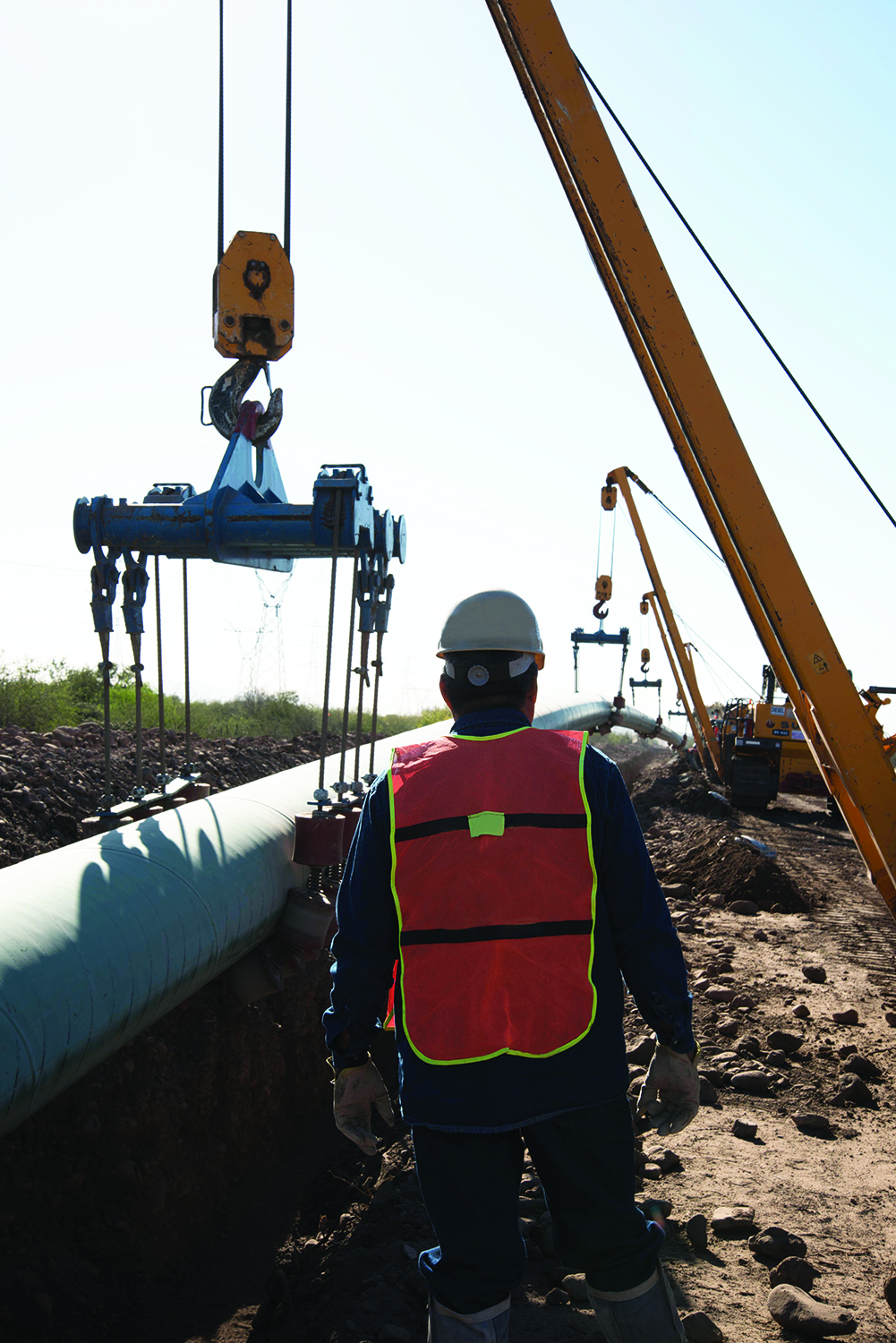
- Only pre-qualified contractors experienced in the construction of large-diameter pipelines were hired to build the gas pipeline.
- Inspectors and engineers with extensive experience in the construction of natural gas transmission pipelines were in the field at all times to supervise the construction activities and the commissioning of the system.
- Field inspectors were onsite to witness all aspects of the pipeline installation, including but not limited to: trenching, pipe handling, welding, backfilling, testing and cleanup.
- Consultants were hired to carry out work in many specialized areas related to civil design, including, but not limited to: hydrology, seismic and geotechnical mitigation.
- Environmental experts were employed to ensure the proper handling of material, and proper care was taken when working around various known animal habitats and vegetation. In addition, archeological and anthropological experts were employed to ensure proper mitigation measures in isolated areas where indigenous habitation was identified.
Operations
- Accident and damage prevention measure warning signs are clearly displayed throughout the pipeline right of way to serve as identification and warning notices to the general public.
- Underground marker tape was installed to identify the location of limits of the ditch and the pipeline.
- Supervision is required during all construction projects adjacent to the pipeline.
Corrosion Control
Corrosion control measures included:
- The application of both external and internal coatings to the pipe.
- The design and installation of a cathodic protection system which includes rectifiers, impress current, and deep well anodes.
- On-going system monitoring, including:
- Continuous remote real-time pipeline system pressure monitoring.
- On-going physical patrol of the entire pipeline system with natural gas detector equipment.
- On-going communications and participation in various training exercises with local authorities.
The possibility of an accident is very remote, due to the strict quality control of the materials and the continuous monitoring with special equipment that detect any potential problem. However, should an emergency take place, a team of experts is available to respond 24 hours a day, 365 days year. Programs of mutual cooperation with civil protection agencies, fire departments and other governmental emergency response parties are coordinated to ensure a timely response to any emergency situation.